The work
Every brief we are given
is a brief about a product.
None of them stay that way.
Twelve of them, opened out. The tension we found, the idea it produced, and what happened next.
01 · Vodacom Tanzania
People only notice a network
when it fails them.
The tension
A telco spends its life arguing about speed, coverage and price. Those are the three things a customer never thinks about until something goes wrong. The category had trained an entire country to treat the network as plumbing.
Every competitor was claiming the same superiority, in the same words, on the same billboards. The network had gone invisible precisely because it worked.
The idea
Stop describing the product. Hand the sentence to the country and ask them to finish it.
One device, completable by anybody, in Kiswahili, in about twenty seconds. It became the line, the song's hook, the billboard lockup, and then the mechanic of a piece of software.
Zaidi ya ____. Ni ____.
Five ways the country finished the sentence


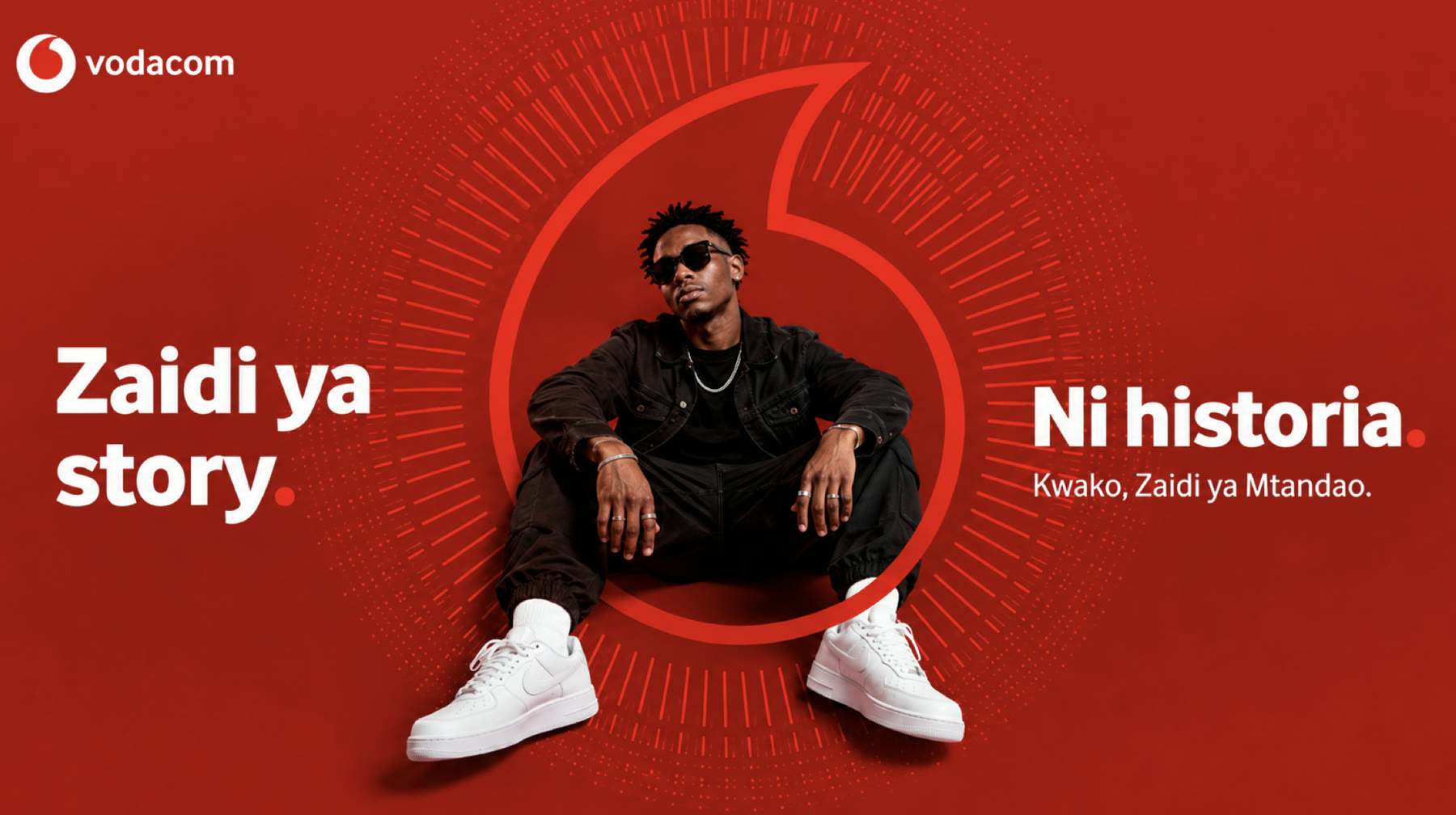
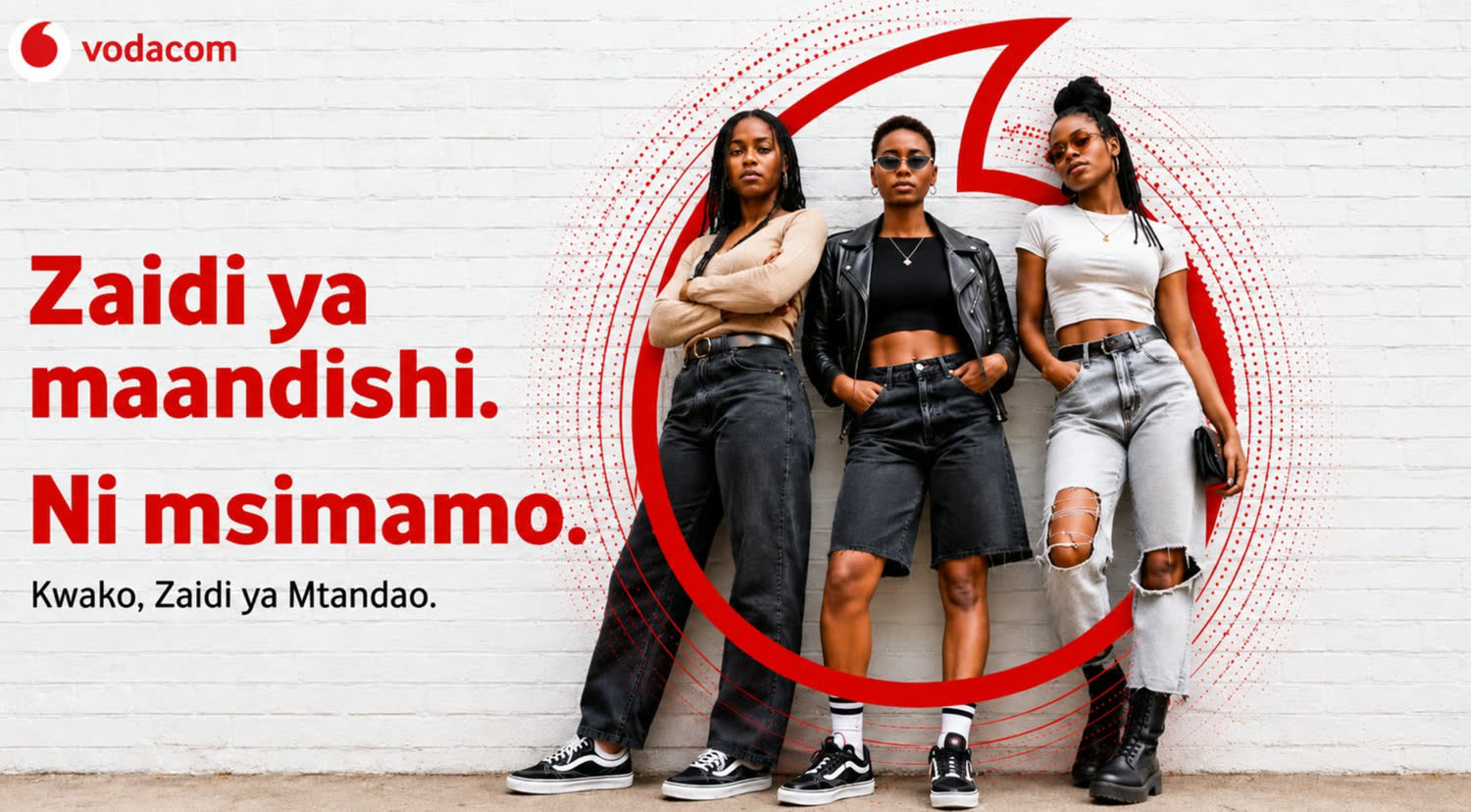
And then it went up across Dar es Salaam



2 × 60″
Films delivered
Two complete broadcast masters, written, directed and delivered to transmission spec.
Five
Audience segments built
Mass, Youth, M-Pesa, Business and High Value, each with its own art direction, key visual set and layered production masters.
Nine
Finished outputs from one fourteen-second voice note
The platform that came out of the campaign. See the engine room.
The same client, four years earlier
Tupo Nawe, Tena na Tena.
Twenty-five years is a long time to stay with somebody, and the work had to honour that. Not a list of milestones, but an argument that Vodacom had been quietly present at the weddings and the graduations, up the mast with the technician and in the hall with the student. We are with you, again and again.
Regional brand platform for the 25-year anniversary. Film, print and partnerships, national in Tanzania.



02 · Safaricom · 2023–2024
Gen Z does not want brands
to connect them to things.
They want brands that connect with who they are.
The tension
Safaricom was losing Gen Z, and the signals were unambiguous: heavy multi-SIM use, a falling perception of affordability, and a widening gap between the brand and the identity of the people using it.
What the segment actually faced was an ambition-resource gap. Enormous drive, nothing to apply it to. A network cannot fix that with a cheaper bundle.
The idea
We moved the brand from network-led storytelling to identity-led storytelling.
Safaricom is the plug. Not the provider. The enabler. The gateway to opportunity, expression and growth.
The visual system followed the thinking: streetwear-inspired, typography rooted in youth culture, layouts that were bold and unapologetic, and a voice that moved between English, Kiswahili and Sheng without apologising for any of them.

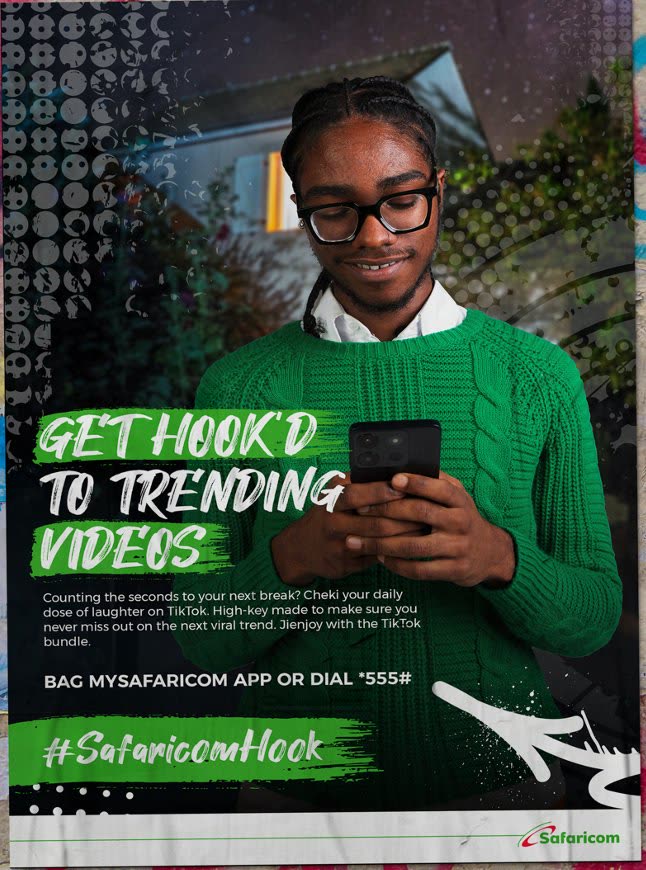
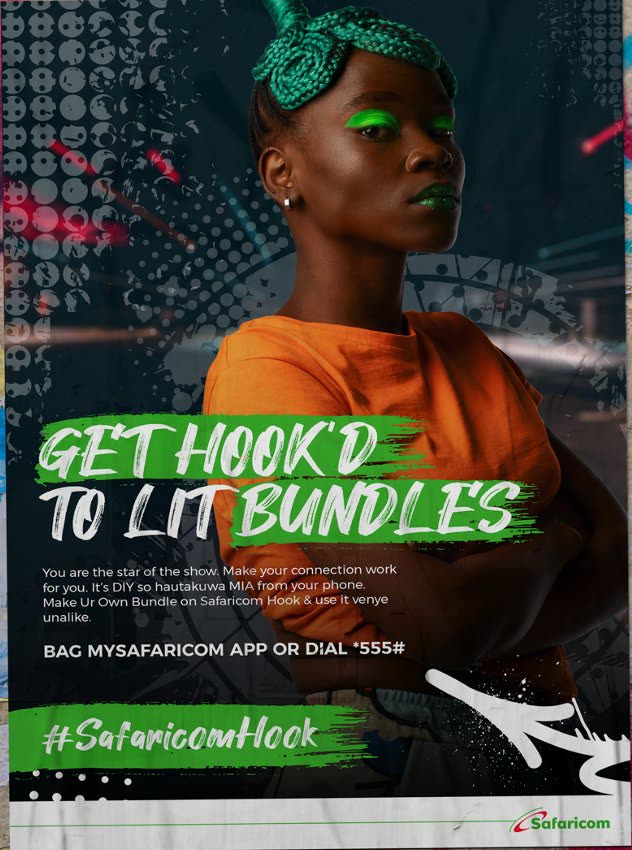
It was not a campaign. It was a system.
Propositions. Make Your Own Bundle, TikTok bundles, gaming, music and education packages. Partnerships. Meta, Wowzi, BrighterMonday, Power Learn Project. Cultural activation. Solfest, Oktobafest, Tecno Spark, campus activations nationwide. Always-on digital, built on one belief: silence kills salience.
1M → 4M
Platform customers
A 300% increase over the engagement.
KES 18.5B → 20.5B
Revenue on the platform
Up 11%.
61 → 70
Net Promoter Score
91.3%
Digital reach
With more than 100,000 customers engaged on the ground.
03 · Safaricom Shine Kenya · 2023
Hope alone is not enough.
Tools alone are not enough.
You need both.
The tension
Competition was intense, consumers were financially stretched, and loyalty was under real pressure. The brief was to defend value across voice, data and M-Pesa.
The trap in a squeeze is to talk about price, which invites the customer to compare you on the only axis where you cannot win.
The idea
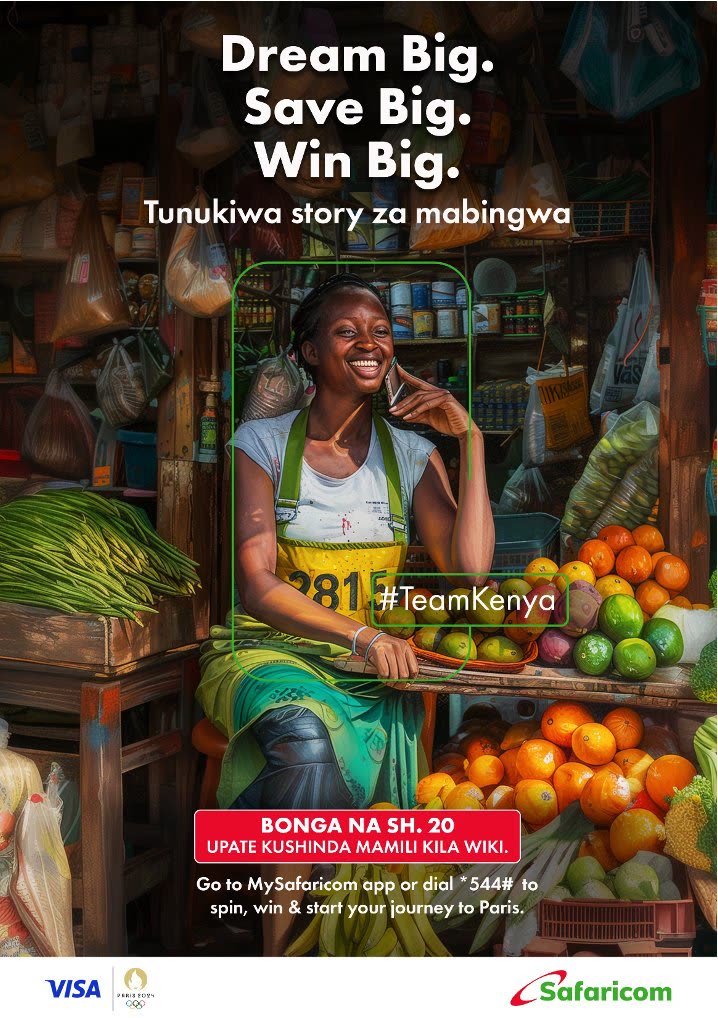
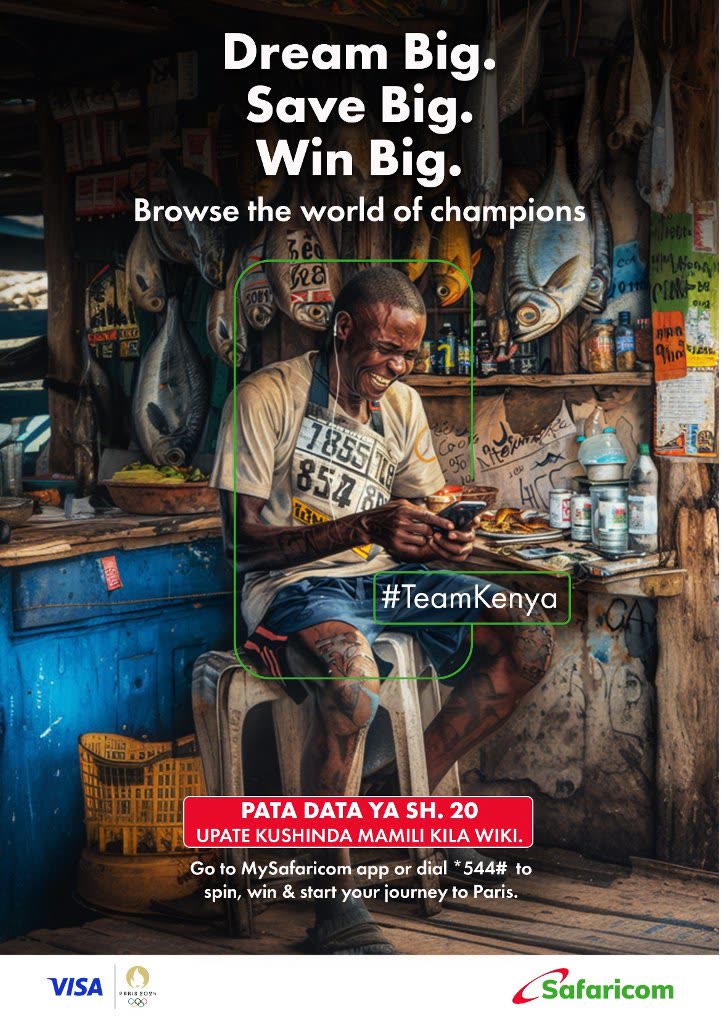
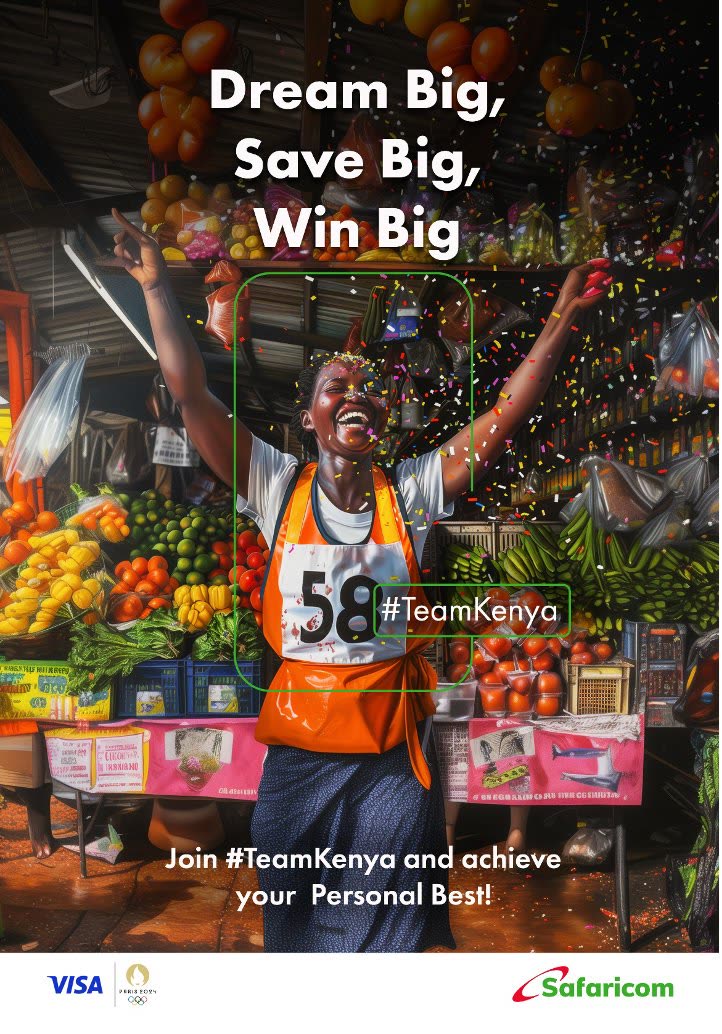
We stopped describing products and described a life. The audience were Strivers. People making careful, deliberate financial decisions every single day, and getting no credit for it.
They needed two things at once. Spark: the emotional fuel, the belief that the effort is worth it. Solutions: something practical that works in the hand. Give them only one and nothing moves.
Safaricom is where winning begins.
49% → 52%
Voice market share
#1
Net Promoter Score position
With a brand love score above 65.
22M → 23M
Data sales
M-Pesa transactions and usage up over the same period.
04 · Safaricom Blaze
There were no jobs.
There was extraordinary talent.
The tension
Brand consideration among young Kenyans was falling. They saw Safaricom as their parents' network. Premium, distant, faintly irrelevant. A quarter of youth customers were carrying a second SIM, which is what people do just before they leave.
The idea
Blaze asked young Kenyans a different question. Not what do you consume? but what are you building?
So it was not a tariff. It was a network built on the premise that purpose, mentorship and opportunity matter as much as connectivity, with real mentors, real work and real people on it.
3.6M
Users on the platform
KES 28B
Revenue generated
From an idea, through a platform, to a business line.
05 · Flip the Script · Zimbabwe & Malawi
The issue was never awareness.
It was perception.
Everybody knew. That was the problem.
The tension
Antiretroviral treatment was available, effective and free. Uptake stayed low anyway. Health communication kept answering that with more information, as though the obstacle were ignorance.
It was not. HIV was still bound up with death, shame and the loss of a self. Nobody refuses a tablet. They refuse to become the person they think the tablet makes them.
The idea
So we stopped talking about treatment and started talking about what treatment gives back. Not surviving. Living.
Built with the community itself through human-centred design, segmented by emotional state rather than demographic, and expressed in the plainest possible terms:
I can love. I can marry. I can have kids. I can run. I can age well.
Treatment reframed as freedom rather than limitation.


Weakness
→ resilience
The perception shift
What people believed a positive diagnosis said about them.
Acceptance
ART acceptance and engagement increased
With strong community-level behavioural change across both markets.
USD 1.8M
Zimbabwe project value
06 · WWF
A country does not protect
what it is told to protect.
The tension
Conservation communication has one setting: warning. It tells people what they are about to lose, in the voice of somebody who arrived to save them from themselves.
Guilt is a poor engine. It moves people once, and then they avoid you so they do not have to feel it again.
The idea
A country protects what it already believes belongs to it. So we stopped asking Kenyans to save something, and started reminding them what was theirs.
The air. The mountains. The elephants. The river that becomes the tap. Not a campaign about loss, but an inventory of inheritance, scored and sung.
07 · Unilever · Kenyan elections
Nobody is born knowing
which side you are on.
The tension
Every election, Kenyan brands say the same word: peace. Peace messaging is the safest thing a company can put its name to, which is exactly why it changes nothing. By the third billboard it has become wallpaper.
And it is aimed at the wrong moment. By the time a campaign asks an adult to choose peace, the adult has already chosen a side, usually decades ago, usually from somebody they loved.
The idea
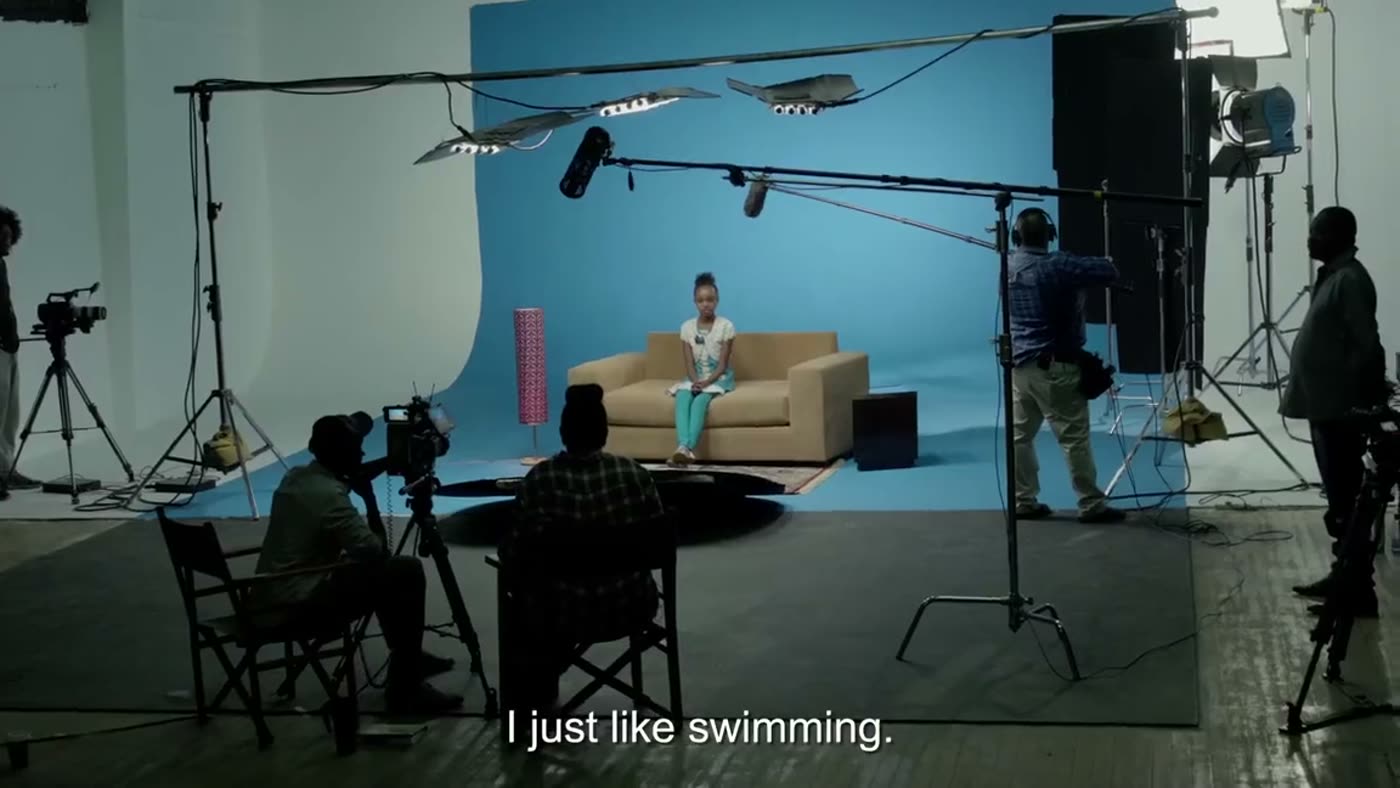
So do not make an advertisement about peace. Run an experiment, film it honestly, and let the country watch the result.
We put children on a set, gave them two gifts, and left them alone with a simple situation. Nobody told them what to do. What they did, reliably and without being asked, was give one away.
Because kindness is a very important thing in the world.
That line is not a copywriter's. It is a boy explaining himself to camera, and no adult in the country could argue with him.
No script
The children were not given lines
Which is the only reason the film is persuasive. An adult performing generosity is an advertisement. A child doing it without being asked is evidence.
Six brands
One endorsement, at the very end
The house of brands signs the film rather than starring in it, because the moment the logo arrives early, the experiment becomes a commercial.
08 · Zimbabwe · Social impact
You cannot out-argue a belief.
You can only out-feel it.
The tension
One in three girls in Zimbabwe is married before adulthood. Poverty, religion and custom combine to frame it not as harm but as necessity, and, in the mind of the family agreeing to it, as care.
Everybody involved believed they were doing the right thing. That is what makes it so difficult. You are not arguing with ignorance. You are arguing with love, pointed the wrong way.
The idea
Not condemnation, which lets people dismiss you as an outsider. A question, asked in the family's own terms, using the family's own arithmetic: the bride price.
Is a cow worth more than your sister?
One image. The country stopped, and then it argued with itself, which was the entire objective.
The image that stopped the country
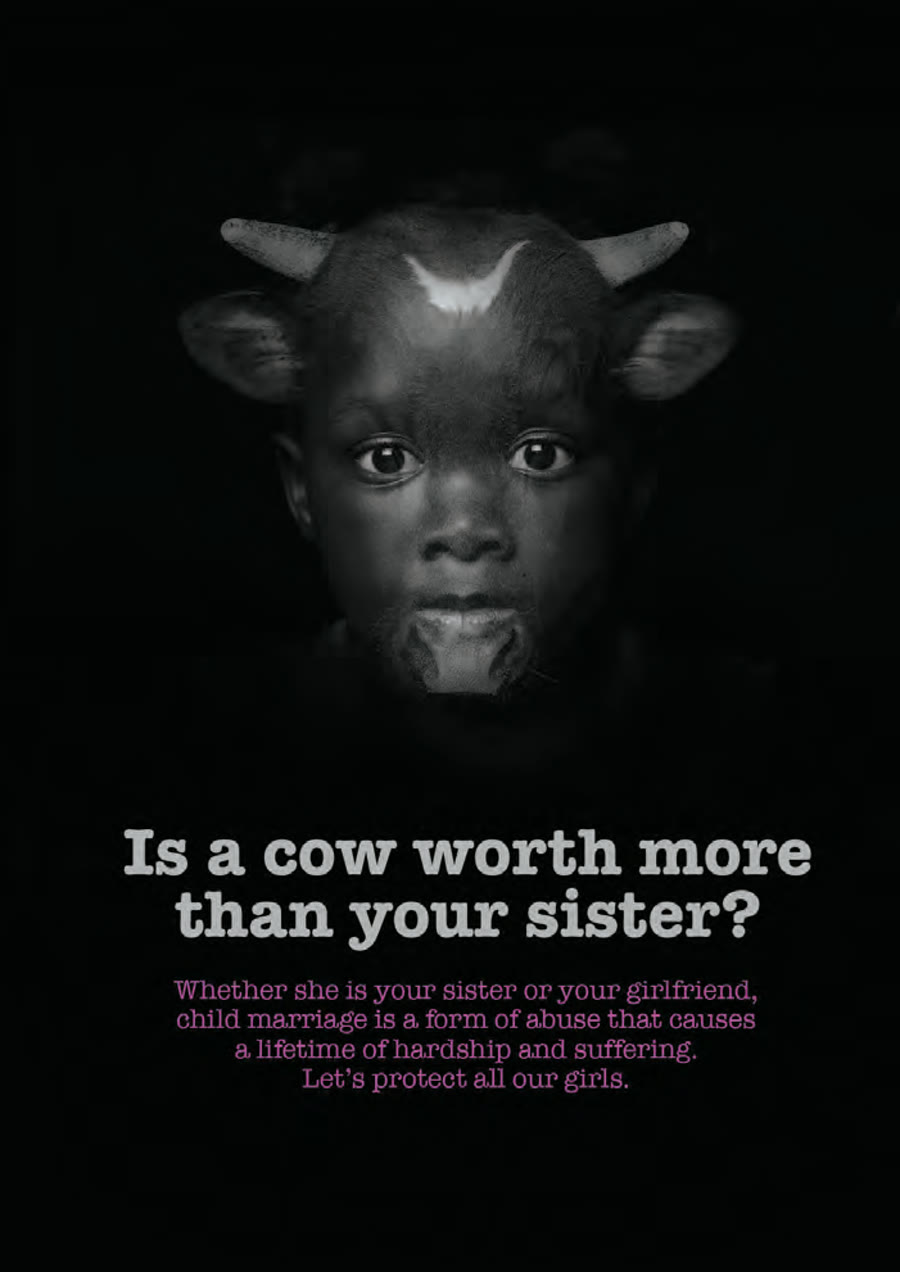
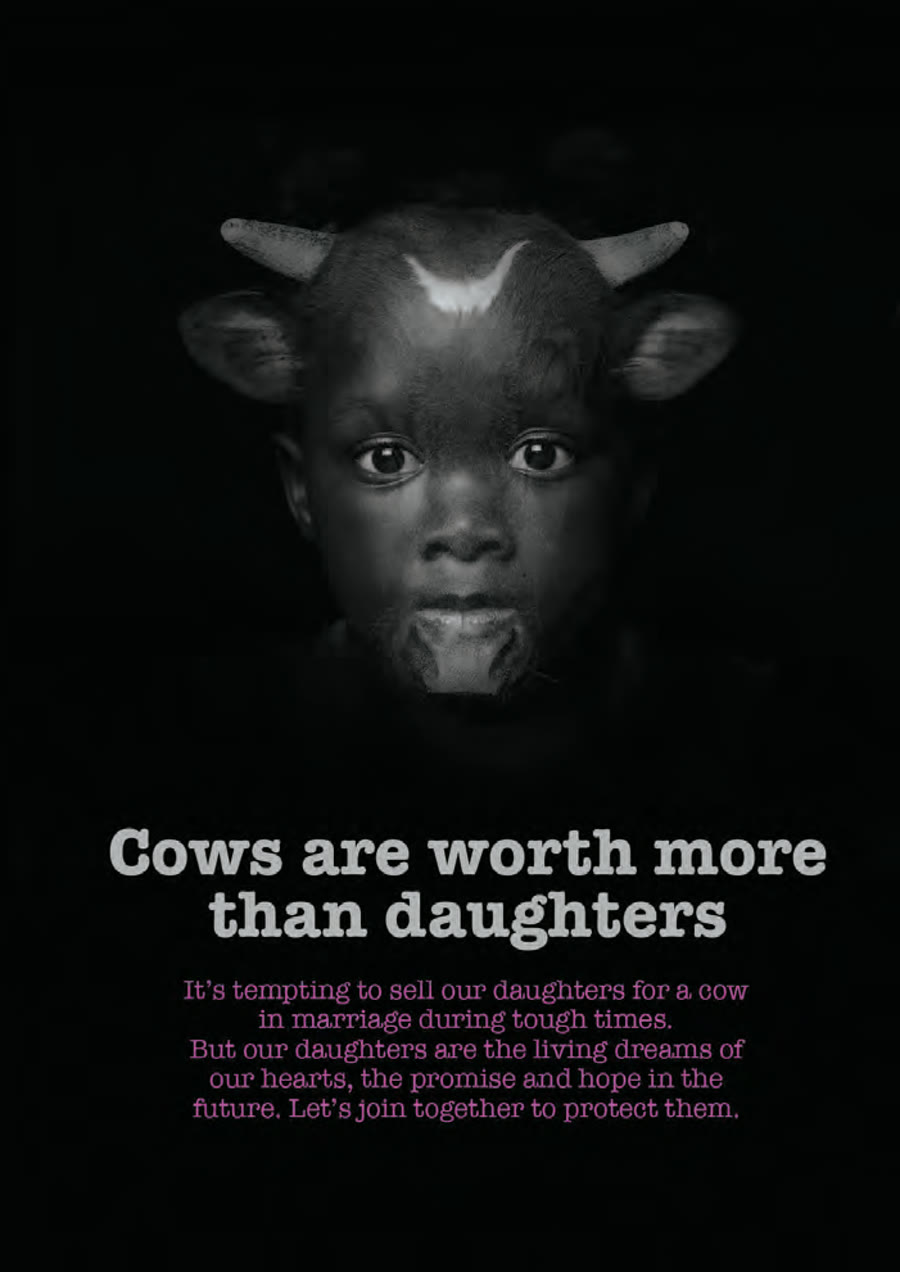
No copy explains the idea, because the picture already has. The bride price is not argued with. It is simply shown for what it turns a daughter into.
National
Media coverage, unpaid
The point
A community conversation, held out loud
Behaviour does not change when people are told. It changes when they hear their neighbours disagreeing.
09 · CFAO Mobility Kenya · All brands
The category sells new.
We went and bought still.
The tension
Ten brands, three customer types, two drivetrains, and a flood of high-spec, low-price entrants resetting what a car is supposed to cost. That drags every badge onto the same battlefield: price and specification.
Which is the one fight CFAO cannot win, because everything that actually makes it different, from 170 years to forty-three service centres, genuine parts and local assembly, is invisible on a sticker.
The real problem, in one sentence: the moat is exactly what the price-and-spec conversation makes impossible to see.
The idea
A vehicle purchase looks rational. It is not. It is an emotional bet a person or a business places on their own forward motion. The question is never really which is cheapest. It is which one will keep me moving?
And in Kenya, the highest compliment you can pay a machine is not that it is new. It is that it is still here.
Bado iko.
So we gave a ten-brand portfolio one word, in two languages, that the category never uses.
Still. Bado.
ba·do (Swahili · Sheng): still. still here. still going. still moving. The line: Still moving. Bado tunasonga. The endorsement, on everything: A CFAO Mobility brand. Bado.
Why one quiet word does four jobs
It is unexpected. The category shouts latest model, lowest price. One word it never uses cuts straight through.
It unifies without flattening. The master brand owns the meaning; every badge keeps its own kind of still. Ten campaigns finally behave like one company without any of them disappearing.
And it quietly wins the price war
Cheap stops. Good keeps going. It moves the argument from purchase price to staying power, the one ground on which cheap competition cannot follow.
It makes the moat the story. Forty-three service centres, genuine parts and local assembly stop being a footnote and become the entire point.

Competitive pitch work for RFP 004/2026, Lot 2.
10 · AGRA · YEFFA
They did not leave farming
because it was hard.
The tension
Every programme aimed at getting young people into agriculture begins by explaining that agriculture is important. Young people already know it is important. Their grandparents did it, and it is precisely why they are leaving.
And there is a second problem underneath. Development communication addresses "youth" as one enormous undifferentiated block, which is a very efficient way of speaking to nobody at all.
The idea
They walked away because nobody had ever made it sound like a future. Only like a duty, a fallback, or somebody else's plan for them.
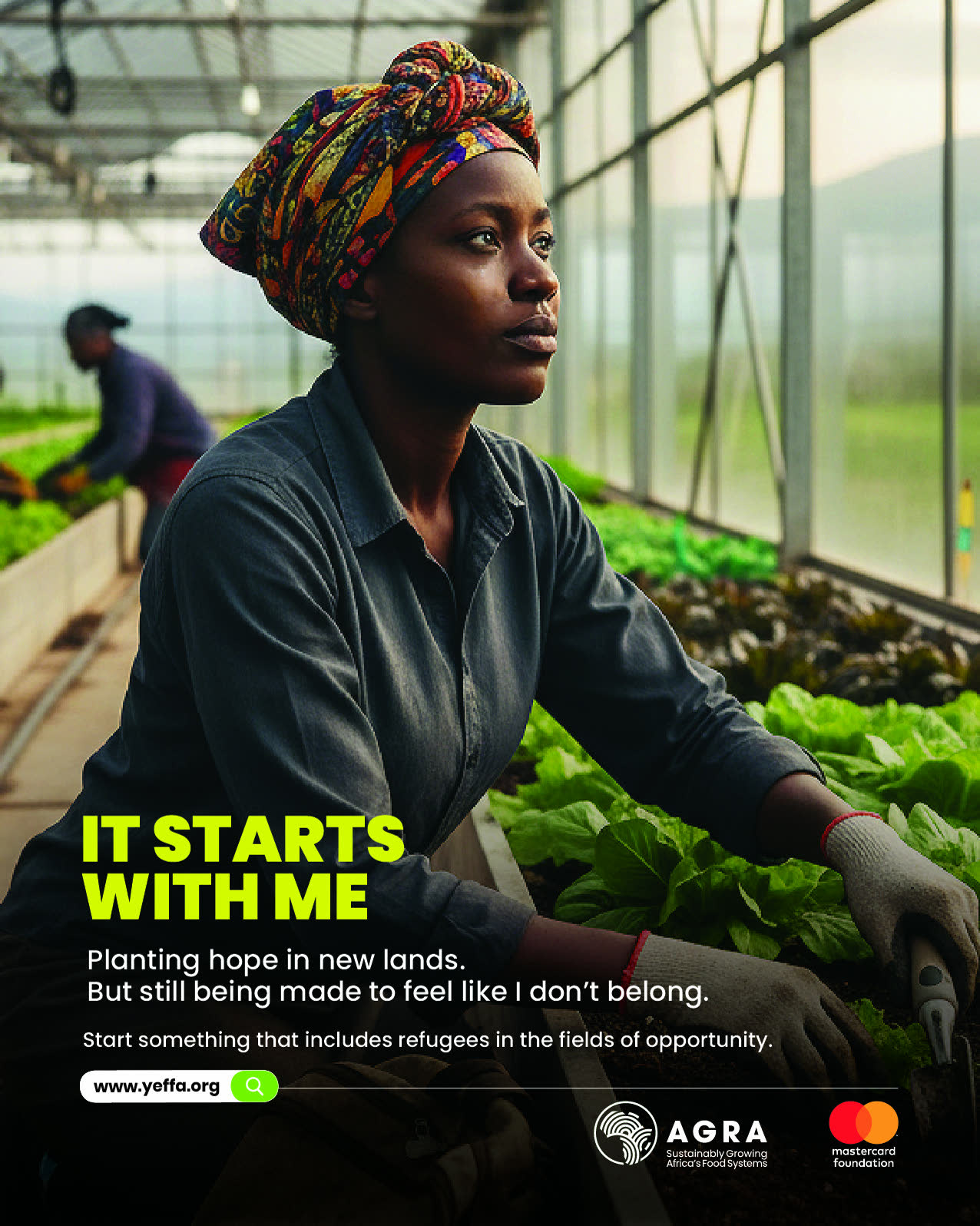
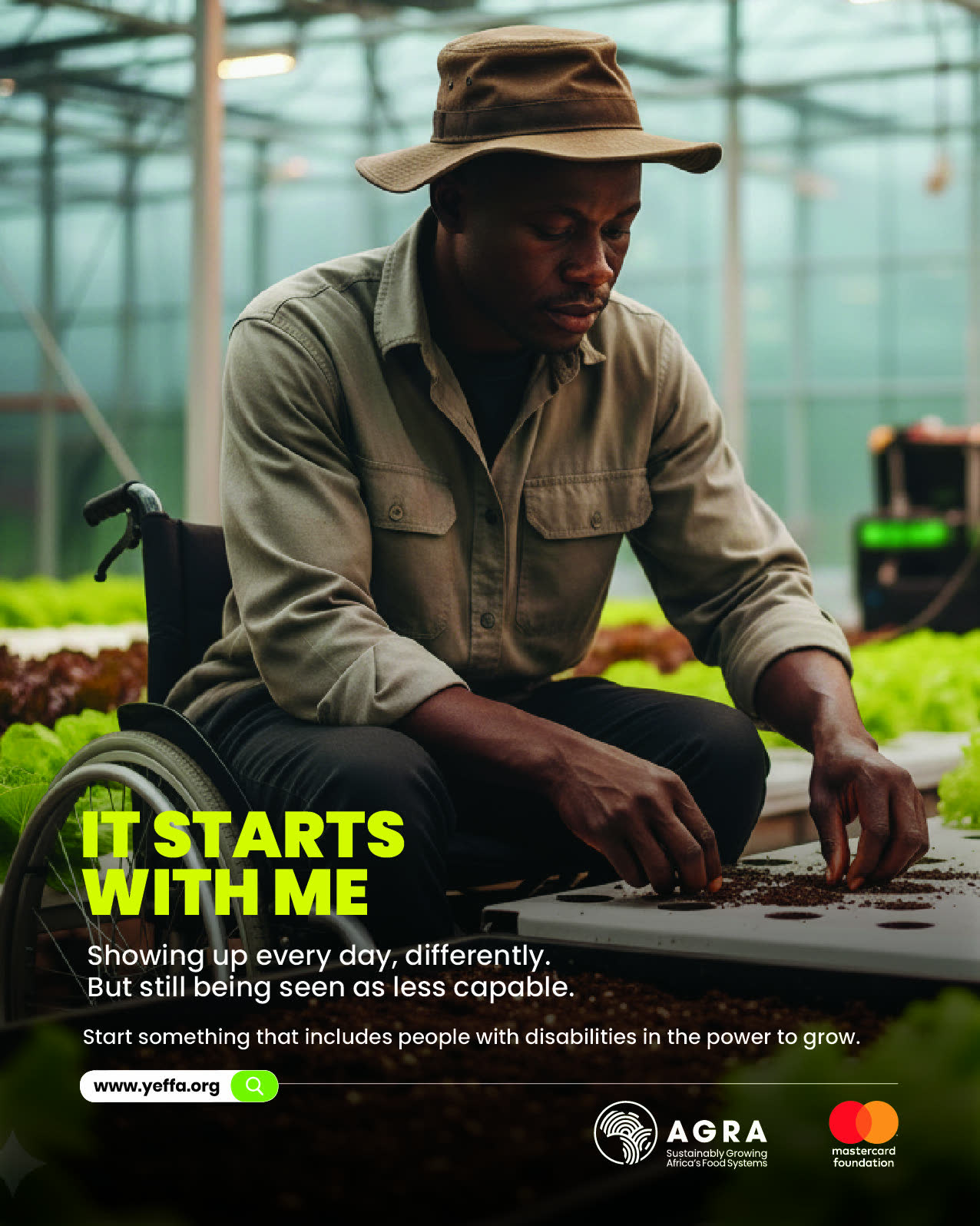
So the platform hands the sentence back. It Starts With Me. First person, present tense, no institution speaking on anybody's behalf.
Then it refuses the monolith. The campaign is built for the people the growth story usually forgets: young people with disabilities, refugees planting where they have no roots, women locked out of finance and land.
The people the growth story forgets
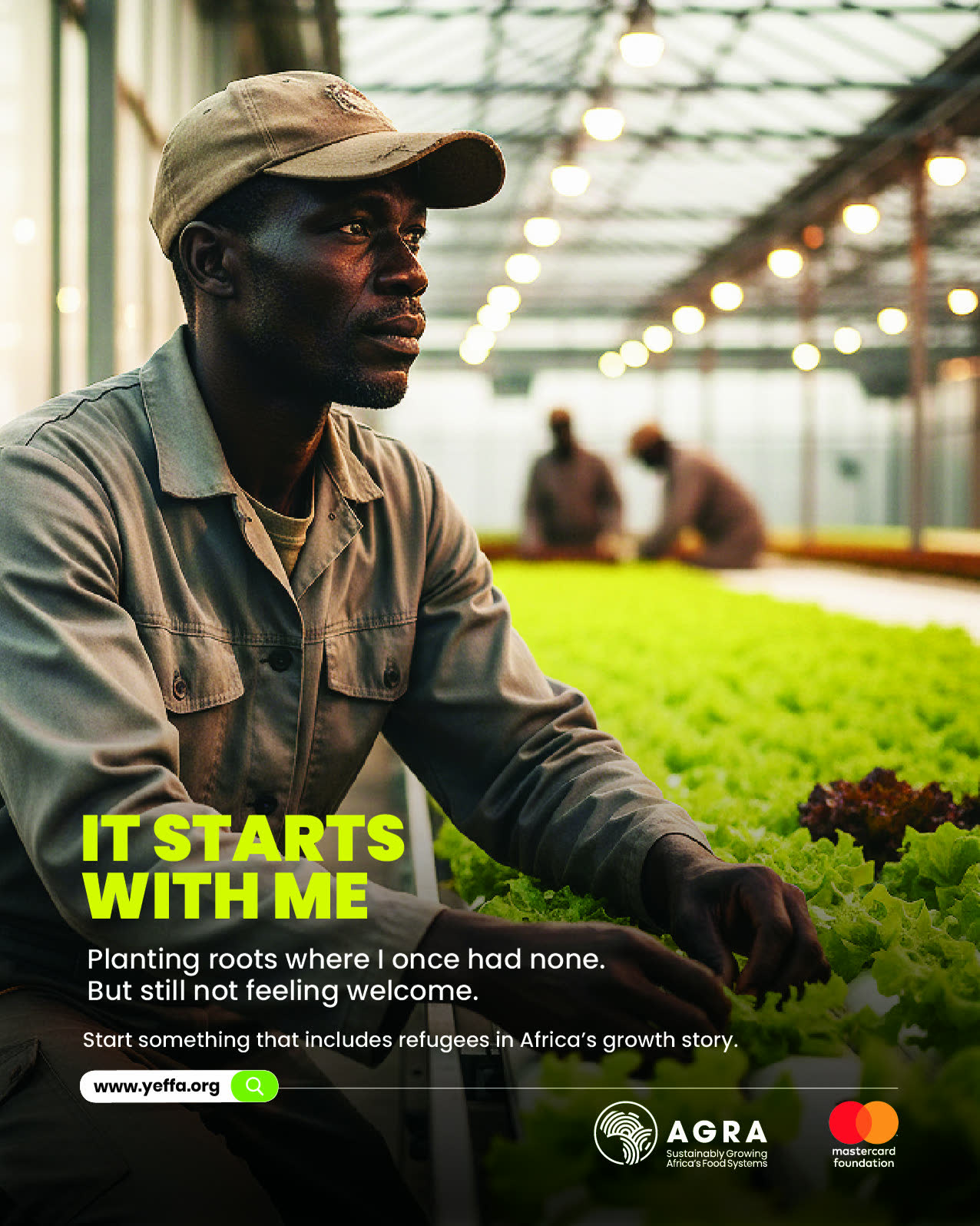
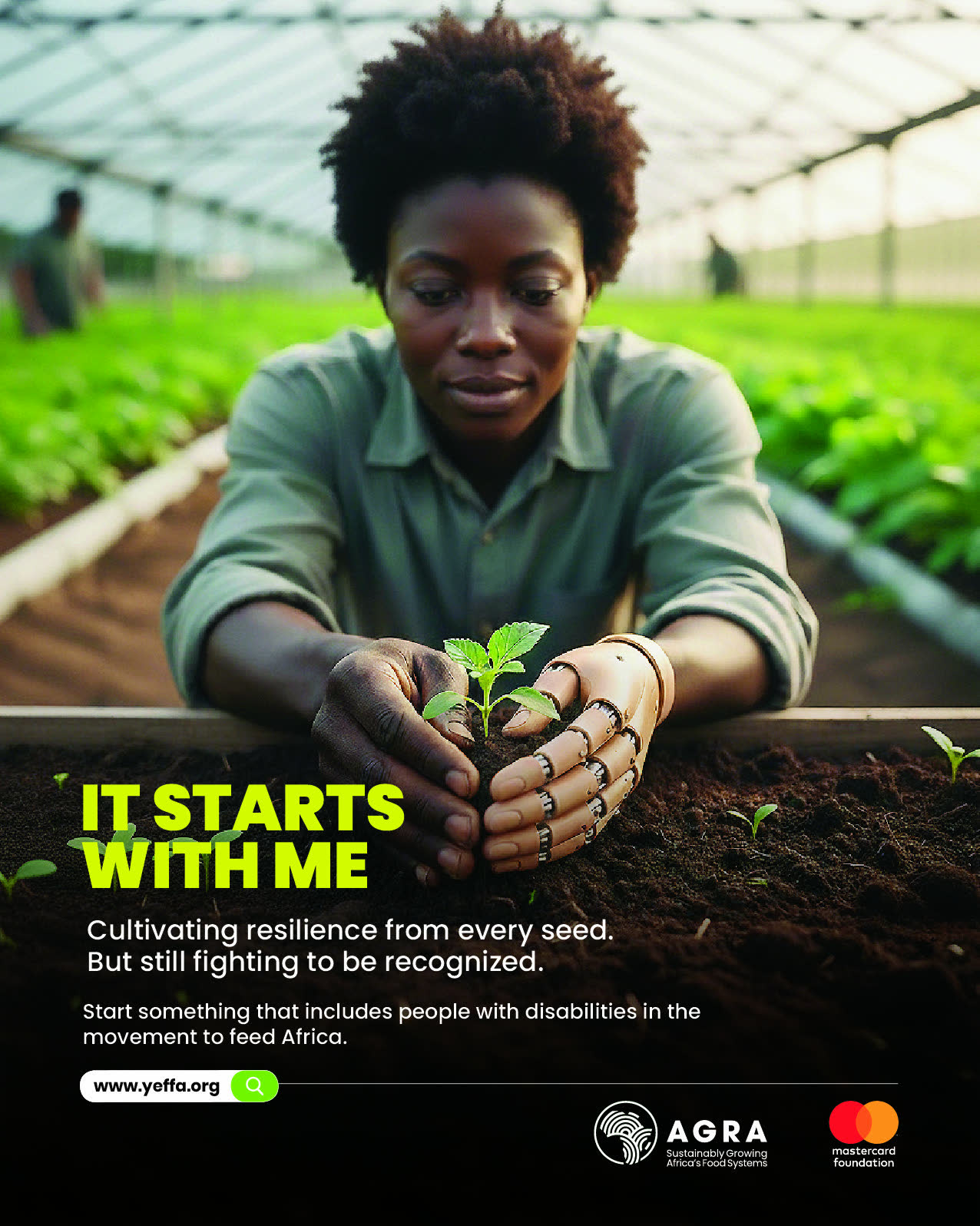
Seven markets
Rwanda · Malawi · Ghana · Mali · Tanzania · Burkina Faso · Mozambique
Three tiers, sequenced by readiness rather than launched all at once, across East, West and Southern Africa.
Seven languages
Kinyarwanda · Chichewa · Twi · Bambara · Kiswahili · Mooré · Portuguese
Plus English and French. A continental campaign that is not simply an English campaign translated late.
One library
A shared asset library and a single tag schema
Country teams collect and moderate locally, then everything is tagged identically so the whole programme can be compared. The same thinking as the engine room.
11 · BYD Kenya
Nobody buys a car.
They buy the version of themselves who drives it.
The tension
Electric vehicle marketing is a specification sheet with a soundtrack. Range, charge time, torque, emissions saved. All true, all forgettable, and all of it aimed at a rational buyer who does not exist.
The idea
The person considering an electric car in Nairobi is not doing arithmetic. They are auditioning a version of themselves. Someone slightly ahead, slightly unbothered, going somewhere the rest of us have not been yet.
So the campaign took them there. One idea, built out across WhatsApp, Reels, carousel, stories, email, digital, a landing page and a live experience, with the same quiet promise on every surface.
One idea, eight surfaces


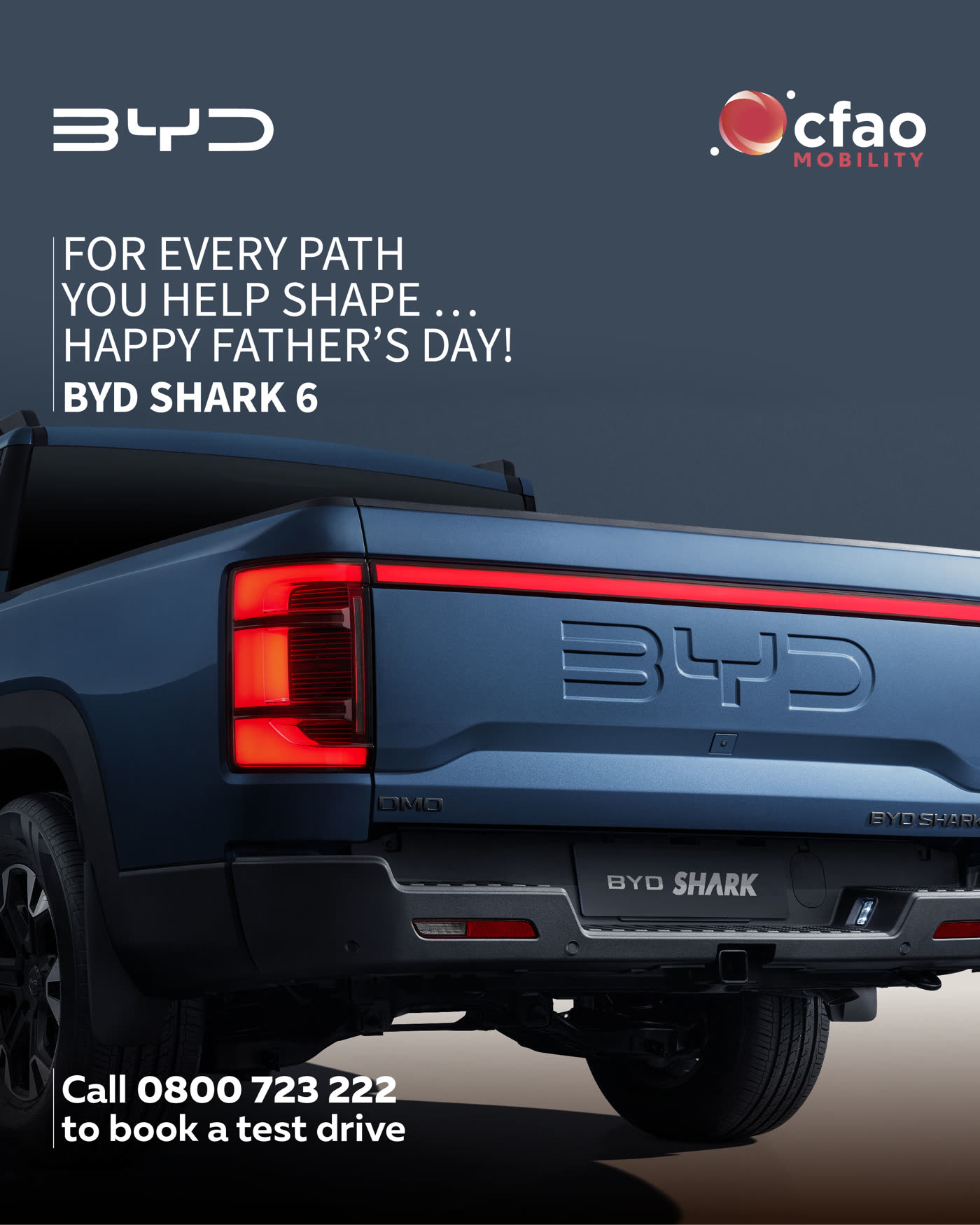



Retained integrated agency. Creative shown is client-approved and published.
12 · Norwegian Refugee Council · IDMC
The hardest thing to fund
is the thing everything else stands on.
The tension
IDMC produces the global figures on internal displacement. It is not an operational agency: it does not run camps, deliver aid or advocate. It monitors, validates, triangulates and applies one consistent methodology across every country and every year, so that displacement can actually be compared.
Which creates a brutal funding problem. Money follows visible delivery. A blanket photographs well. A methodology does not.
So the organisation everybody quotes was struggling to explain, in terms a donor committee could act on, what exactly it was they were funding.
The idea
Stop asserting the value and go and collect it, from the people who use the data and have no reason to flatter anybody.
Sixteen stakeholder interviews across donors, diplomatic actors, pooled funds, regional bodies and analytical platforms. A coding framework applied to all sixteen. Then a cross-interview synthesis to find what they said independently of each other, which is the only kind of evidence a board treats as real.
Four attributes came back consistently: independence, comparability over time, clarity, and early signal.
Which produced the sentence the organisation had been missing:
Displacement is only visible, comparable and interpretable because somebody makes it so.
What we actually delivered
Not an advertisement. A working communications system for an institution that has to persuade governments: the evidence synthesis itself, a set of key messages and talking points so that everyone from the director to a desk officer says the same defensible thing, a two-page brochure, an infographics package with a design brief written for the art directors, a customisable donor briefing deck, a feature article, and a survey instrument to keep the evidence current after we left.
Sixteen
Stakeholder interviews, coded and synthesised
Donors, diplomatic missions, pooled funds, regional organisations and analytical platforms.
One language
Adopted across the organisation
Consistent, sourced and defensible, so the argument survives being repeated by somebody who was not in the room.
Why it is here
This is not advertising, and that is the point
The method does not change. Find the truth, then make it impossible to ignore. Sometimes that produces a sixty-second film. Sometimes it produces a two-page brochure that unlocks a budget in Geneva.
Start something
What are you
actually trying
to change?
We will tell you what we think in the first meeting.